Garage Condos for Sale Near Me: How to Actually Find One in 2026
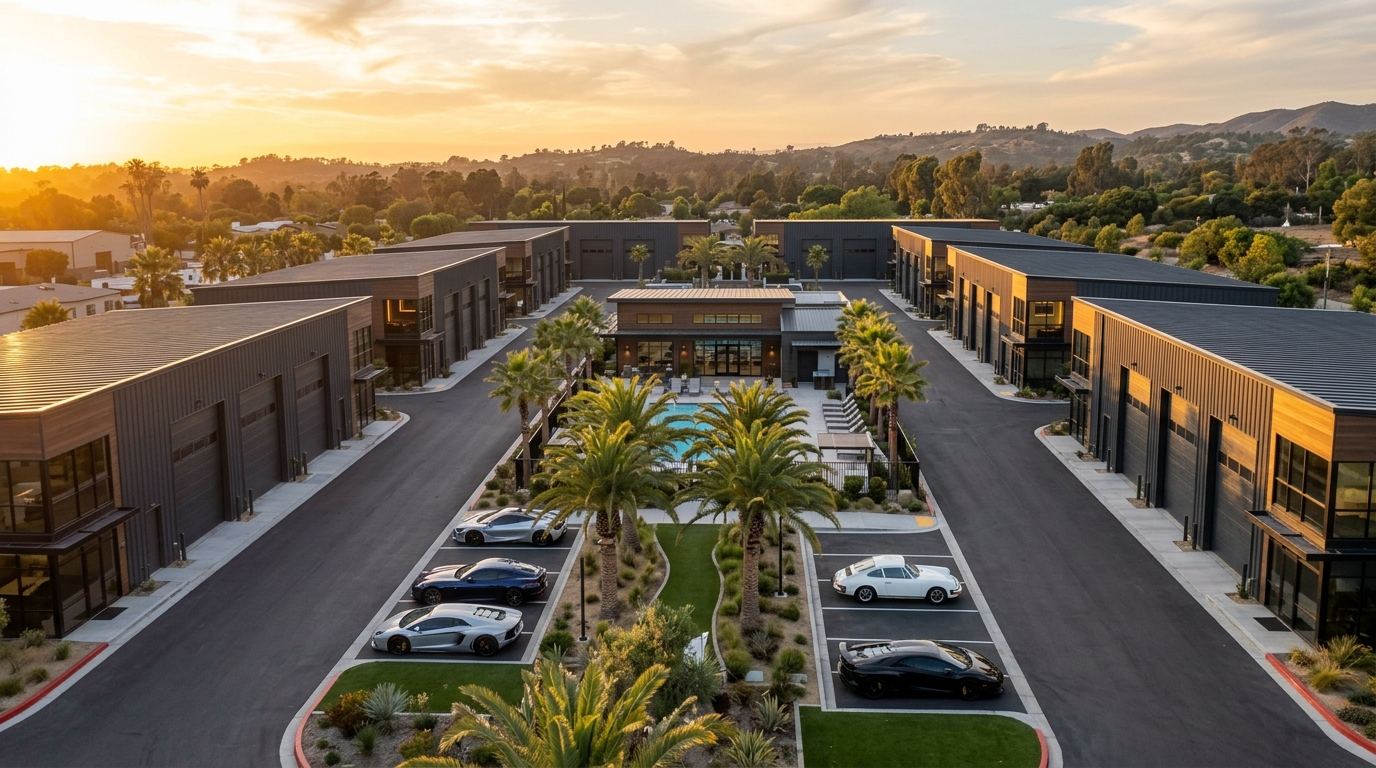
Type "garage condos for sale near me" into Google and you will get a page of self-storage ads, a few expired Craigslist posts, and maybe one Zillow listing from three states away. That is not because garage condos are rare — there are hundreds of communities operating or under construction across the country — it is because the way these units are bought and sold does not match the way residential real estate search engines work. This guide explains exactly why the usual tools fail, walks through a five-step process that actually surfaces available units, shows what "near me" realistically means in each region of the country, and covers how to buy pre-construction and which red flags should make you walk away. We track 273 garage and car condo communities across 42 states in our national directory, so the market data here comes straight from what is actually on the ground.
Why Zillow and the MLS Keep Failing You
Garage condos fall into a gap between residential and commercial real estate, and that gap is exactly where consumer search portals go blind. There are three structural reasons your searches come up empty.
1. Most units are classified as commercial property
A garage condo is typically deeded as a commercial or industrial condominium unit, not a dwelling. Zillow, Redfin, and Realtor.com are built on residential MLS feeds. When a garage condo is listed at all, it usually goes into a commercial database such as LoopNet or Crexi, or onto a local commercial MLS that consumer sites never index. Some residential agents will shoehorn a unit into the residential MLS under "other" or "land," but those listings are inconsistent, badly categorized, and easy to miss even when you are looking for them.
2. Developers sell direct and never list
The majority of new garage condo inventory is sold directly by the developer, often from a sales trailer or a simple website, before and during construction. Popular projects in strong markets can sell a large share of their units during pre-construction, which means the units never touch any listing platform at all. If you only watch the MLS, you are only seeing the leftovers and the resales — you are structurally late to every new project in your area.
3. Resales happen inside the community
Once a community is established, owners tend to sell to people they already know: the guy two doors down who wants a second unit, a name from the waitlist the association keeps, a friend from the local cars-and-coffee scene. Many communities have private owner groups where units change hands with nothing more than a text message and a title company. These inside resales are invisible from the outside, which is why joining waitlists and getting known in a community before you buy matters so much.
The 5-Step Search Process That Actually Works
Because inventory is fragmented across developer websites, commercial platforms, and private owner networks, finding a unit near you is a process, not a single search. Here is the sequence we recommend.
Step 1: Map every community in your market
Start by building a complete picture of what exists within driving distance, whether or not anything is currently for sale. Our interactive map plots all 273 communities we track nationwide, and our state-by-state directory breaks them out with details on each project. Knowing every community within an hour of you — operating, under construction, and announced — is the foundation for everything else. A community with zero listings today may have three resales next year, but only if you know it exists and you are on its radar.
Step 2: Sort by status
Communities fall into three buckets, and your approach differs for each. Operating communities are fully built and sold out of developer inventory; your only path in is a resale, which means contacting the association or property manager and asking to be added to any buyer list. Under-construction communities usually still have developer units available — contact the sales office directly, because these units rarely appear on any listing site. Announced or pre-construction projects are where the best selection and often the best pricing live, in exchange for taking on timeline risk, which we cover below.
Step 3: Join waitlists — all of them
This is the step most buyers skip and most successful buyers swear by. Email or call every community on your map and ask two questions: do you keep a resale waitlist, and can I be added to it? Also ask the property manager to pass your contact information to any owner thinking of selling. Waitlists cost you nothing, and in supply-constrained markets they are frequently the only way resales ever reach an outside buyer. Treat it like a standing fishing line — the more communities you are listed with, the sooner something bites.
Step 4: Check LoopNet and Crexi regularly
Commercial listing platforms catch the units that do get formally listed. Search LoopNet and Crexi for terms like "garage condo," "car condo," "motor condo," and "storage condo" in your metro, and also browse the industrial-condo category broadly, because listing agents are inconsistent with terminology. These platforms skew toward resales and investor-owned units, and asking prices there tend to run higher than developer-direct pricing — but they are the closest thing this niche has to a public market.
Step 5: Set alerts and check back monthly
Set saved-search alerts on the commercial platforms, follow local communities on social media, and revisit the directory monthly, because new projects are announced constantly — our own count has grown steadily as developers chase demand in the Sun Belt and in cold-winter states. The buyers who land good units are rarely the ones who searched hardest on one day; they are the ones who kept a light, consistent watch for six to twelve months and moved fast when something surfaced.
What "Near Me" Really Means, Region by Region
In residential real estate, "near me" means your neighborhood. In garage condos, it means your metro area — and sometimes your half of the state. Because communities are far less dense than housing, serious buyers routinely drive 30 to 60 minutes to their unit, and in thinner markets it is common to buy the only project within two hours. That is less of a compromise than it sounds: a garage condo is a destination you visit on weekends, not a home you commute from daily, and most owners tell us the drive matters far less than the community and the build quality.
Here is how the national footprint actually breaks down, based on the communities in our directory:
| Market | Communities tracked | What "near me" looks like |
|---|---|---|
| Florida | ~100 | The deepest market in the country. Most metro buyers have multiple communities within 30–45 minutes. See our Florida directory. |
| Texas | 31 | Strong coverage around Dallas–Fort Worth, Houston, Austin, and San Antonio. See our Texas directory. |
| Arizona | 21 | Heavily concentrated in the Phoenix–Scottsdale area, one of the original car condo hotbeds. |
| Colorado | 6 | Front Range focused; expect a 30–60 minute drive from most of metro Denver. |
| Illinois | 6 | Chicagoland suburbs; winter car storage drives demand. |
| Minnesota | 5 | Twin Cities metro; another cold-climate storage market. |
| Alaska | 5 | Clustered in the Anchorage area, where heated garage space is close to a necessity. |
| Everywhere else | Balance of 273 | We track communities in 42 states total; most metros have one to three projects, so expect a longer drive and thinner resale supply. |
Two patterns jump out. First, the market clusters where either car culture or climate makes enclosed space valuable: Florida and Arizona for the collector scene and hurricane or sun protection, the upper Midwest and Alaska for winter. Second, outside the top handful of states, "near me" means "in my metro, if I am lucky." If you live in one of the 42 states with coverage but outside a major cluster, your realistic strategy is steps 1 through 3 above — map, contact, waitlist — because public listings may genuinely never appear.
Buying Pre-Construction: The Trade You Are Making
Because so much inventory sells before it is built, you should understand the pre-construction trade. The upside is real: first pick of unit locations and sizes, developer pricing that is often below what the same unit resells for after the community is established, and the ability to spec options like extra ceiling height, mezzanines, upgraded electrical, or plumbing rough-ins while they are cheap to add. The downside is equally real: you are wiring a deposit — commonly in the range of 10 to 25 percent, structured in stages — against a building that does not exist yet, on a timeline that can and does slip.
Before putting down a pre-construction deposit, verify four things. First, that the developer has actually closed on the land and holds entitlements or permits, not just a rendering and a reservation list. Second, how your deposit is held — in escrow with defined release conditions is what you want to see. Third, the developer's track record: have they delivered a comparable project before, and can you talk to owners in it? Fourth, the contract's outs: what happens to your money if the project is delayed past a defined date or never breaks ground. A legitimate developer answers all four questions without flinching. For the financing side of deposits and construction-period payments, see our guide on how to finance a garage condo.
Red Flags in Garage Condo Listings
When you do find listings, screen them hard. These are the warning signs we see most often:
- "Condo" units that are actually leases. Some facilities market long-term leased bays as condos. If you do not receive a recorded deed to a legally platted unit, you are a tenant, not an owner. Ask for the legal description before anything else.
- No association documents available. A real condominium has a declaration, bylaws, and a budget. A seller or developer who cannot produce them immediately is either disorganized or hiding something — often an underfunded association.
- Zoning that prohibits how you plan to use the unit. Many garage condo parks are zoned industrial and restrict or prohibit overnight stays, running a customer-facing business, or vehicle sales. If the listing promises "man cave, business, anything you want," demand to see the use restrictions in writing.
- Vague utility and insurance details. Confirm whether the unit has its own metered power, water, sewer access, and HVAC capability, and what the association's master insurance policy actually covers versus what you must insure yourself.
- Resale prices wildly above the community's history. In thin markets, a single aspirational listing can sit for a year. Check what units in the same community actually closed for — county records are public — before anchoring on an asking price.
- Pressure to "reserve today" with a non-refundable deposit on an unbuilt project. Legitimate pre-construction sales use escrowed deposits with contractual protections. Non-refundable money against renderings is a gamble, not a purchase.
The Bottom Line
Finding a garage condo near you in 2026 is absolutely doable — it just does not work like buying a house. Map every community in your region using our map and state directory, sort them by status, get on every waitlist, watch LoopNet and Crexi for the listings that do go public, and keep a monthly rhythm until something surfaces. If you are weighing whether a unit makes sense as more than a toy, read our honest breakdown of whether garage condos are a good investment next. And if you own a community or a unit you want in front of serious buyers, list it in our directory — it is exactly where those buyers are already looking.
Frequently asked questions
Why don't garage condos show up on Zillow?
Many garage condos are classified as commercial condominiums, so they get listed on commercial platforms (LoopNet, Crexi) or sold directly by developers rather than through the residential MLS feeds that power Zillow and Realtor.com. Resales often trade owner-to-owner inside the community before they're ever publicly listed.
How do I find garage condos in my state?
Start with a state-level directory. AutomotiveCondos.com tracks 270+ communities across 42 states, including communities that are selling, resale-only, under construction, and planned — so you can see every option in your market, not just the ones paying to advertise.
Can I buy a garage condo before it's built?
Yes. Most new communities sell units in pre-construction phases, and early-phase pricing is usually the lowest the community will ever offer. The trade-off is that delivery dates can slip by months or more.