How to Finance a Garage Condo: Loans, Rates & What Lenders Want
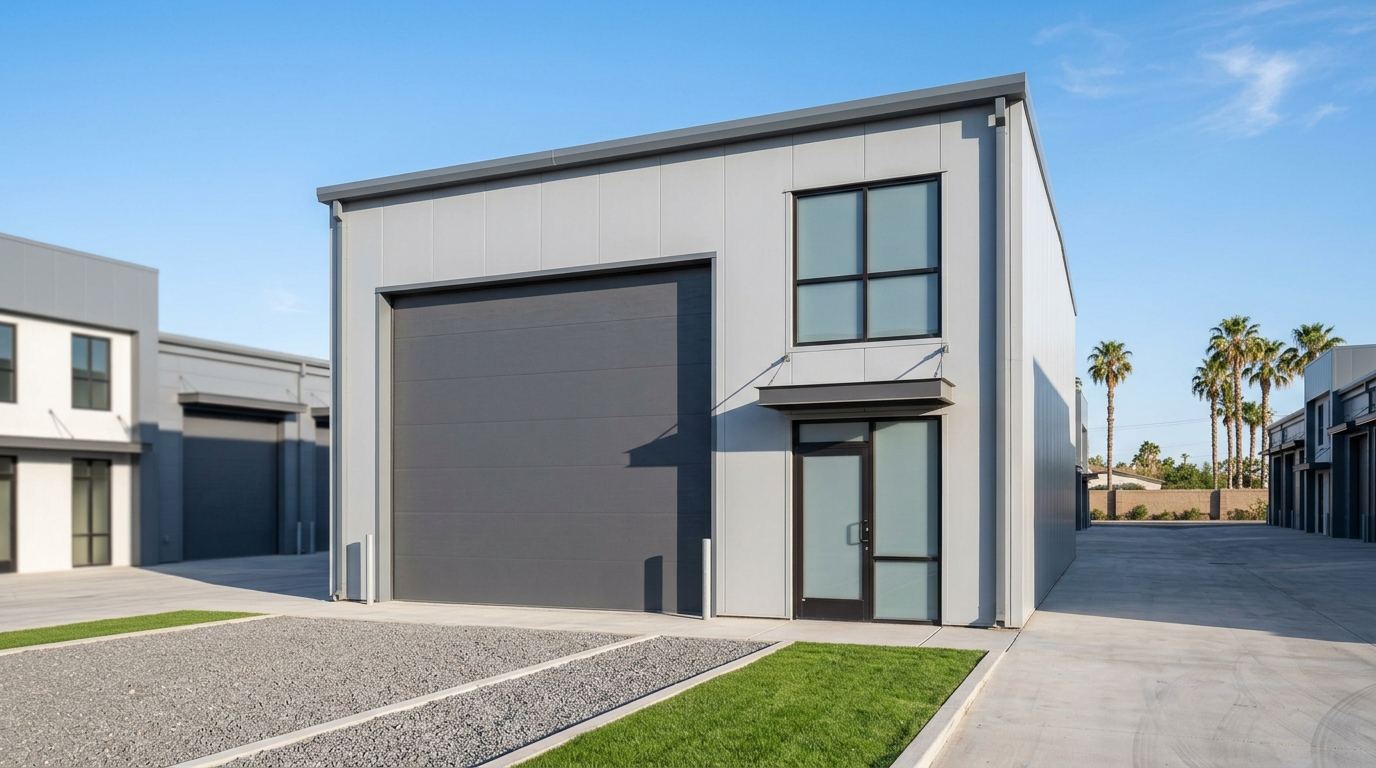
Here is the first thing every garage condo buyer learns at the bank: you cannot get a normal 30-year mortgage on one. Garage condos are deeded as commercial or industrial condominium units, which puts them outside the conventional residential lending system — no Fannie Mae, no Freddie Mac, no FHA, no 3 percent down. That is not the same as "you can't finance one." Tens of thousands of these units have been financed; buyers just use a different set of tools, with bigger down payments, shorter terms, and lenders who actually underwrite the deal instead of feeding it to an algorithm. This guide walks through the five financing routes that work in 2026, compares them side by side, explains exactly what lenders scrutinize, gives you a preparation checklist, covers why applications get denied, and finishes with how pre-construction deposits are typically structured and the myths that trip up first-time buyers.
Why Garage Condo Financing Is Different
Residential mortgages are cheap and long because they are standardized and resellable into a massive secondary market. A garage condo fits none of the boxes: it is not a dwelling, the condo project is not warrantable under residential rules, and comparable sales are thin. So your loan will be held by the lender that makes it — a "portfolio" decision — or structured as small-balance commercial debt. Practically, that means expect down payments in the 20 to 30 percent range, terms measured in 15 to 25 years (sometimes with a balloon or a rate reset), rates that run meaningfully above prime residential mortgage rates, and underwriting that cares as much about you and the condo association as about the unit itself. With that context, here are the five routes.
Route 1: Commercial / Small-Balance Condo Loans
This is the workhorse. Local and regional banks and credit unions make small-balance commercial real estate loans against garage condo units the same way they would against a small office condo. Typical structure: 20 to 30 percent down, amortization of 15 to 25 years, and a rate that is fixed for an initial period (commonly five to ten years) before resetting or ballooning. Closing involves a commercial appraisal and sometimes a review of the condominium documents. The decisive factor is choosing a lender that already knows the asset class: banks that have financed units in your specific community before will close smoothly, while a bank seeing its first garage condo may take months or decline late in the process. Ask the community's sales office or association manager which banks have closed loans there — that one question can save you the entire headache.
Route 2: Portfolio Lenders
Portfolio lenders — banks and credit unions that keep loans on their own balance sheet by design — deserve their own category because of how they behave. Since they answer to no secondary-market rulebook, they can approve property types the big banks' checklists reject, lean on your overall relationship (deposits, other loans, investment accounts), and occasionally stretch to 20 percent down or better terms for strong borrowers. Community banks in markets with established garage condo scenes — Florida, Arizona, Texas — often have an informal specialty in these units. The trade-off is that everything is negotiated rather than standardized, so terms vary widely from one institution to the next. Shop at least three.
Route 3: HELOC or Cash-Out Refinance on Your Home
A large share of garage condo purchases are effectively financed by the buyer's house. If you have substantial home equity, a home equity line of credit or a cash-out refinance lets you buy the unit for cash — which makes you the fastest, strongest buyer in any negotiation and eliminates commercial underwriting entirely. Rates on home equity borrowing are often below small commercial rates, and the paperwork is familiar residential process. The risk is equally plain: you are collateralizing your primary residence to buy a discretionary asset. If your finances tighten, the debt is on your house, not the garage. This route rewards conservative borrowers and punishes overextended ones; be honest about which you are.
Route 4: Developer and Builder Financing Programs
Developers want to sell units, so many maintain financing relationships — typically a preferred local bank that has pre-underwritten the project — and some offer in-house arrangements, particularly during pre-construction. Preferred-lender programs are genuinely useful: the bank has already vetted the condo documents and the project, which removes the biggest source of delay and denial. In-house developer financing (where the developer carries the note) is rarer and should be read carefully: terms are sometimes attractive as a sales incentive and sometimes expensive convenience. Treat the developer's option as one quote among several, never the only quote — and have your own attorney read any developer-carried note before signing.
Route 5: SBA Loans for Business Use
If you will genuinely run a business from the unit — a detailing operation, a shop, inventory storage for a real company — SBA-backed lending can be the cheapest money available. SBA 7(a) and 504 programs are designed for owner-occupied commercial real estate and can bring down payments as low as roughly 10 percent with long amortizations. The catch is the word "genuinely": the SBA requires the property to be majority-used by your operating business, with documentation to match, and the application process is the most paperwork-intensive on this list. This route is not for man caves with an LLC wrapper — misrepresenting use on a federally guaranteed loan is a serious problem. For legitimate business buyers, though, it is often the best deal running. Talk to an SBA-experienced lender and your CPA.
The Five Routes Compared
| Route | Typical down payment | Typical term | Rate level | Best for |
|---|---|---|---|---|
| Commercial / small-balance condo loan | 20–30% | 15–25 yrs (often with reset/balloon) | Moderate–high | Standard purchases in established communities |
| Portfolio lender | 20–30%, negotiable | 15–25 yrs, negotiable | Moderate | Strong borrowers with banking relationships; unusual properties |
| HELOC / cash-out refi | None on the unit (borrows against your home) | Varies with home loan | Often lowest | High-equity homeowners who want to buy "cash" and close fast |
| Developer program | 10–25%, project-specific | Varies | Varies — read carefully | Pre-construction buyers; projects with preferred lenders |
| SBA (business use) | ~10–15% | Long amortizations | Competitive | Owners running a legitimate business from the unit |
What Lenders Actually Underwrite
Understanding what the lender is worried about lets you get ahead of it. Three things dominate.
The condo association's health
Your unit's value depends on an association you do not control, and lenders know it. Expect them to request the declaration and bylaws, the current budget, reserve balances, the owner delinquency rate, and any pending litigation or special assessments. An association with thin reserves or high delinquencies can sink an otherwise perfect application. Before you even apply, get these documents yourself — if they would scare a lender, they should scare you.
The appraisal and its comps
Commercial appraisals on garage condos are hard because sales are thin. Appraisers lean on recent closings in the same community, then comparable communities in the metro, then income and replacement-cost approaches. In a community with recent arm's-length resales, this goes fine. In a brand-new or thinly traded project, appraisals can come in below contract price, forcing you to bring more cash or renegotiate. You can help: give the appraiser (through your lender) a list of recent sales in the community from the association or county records.
You, and the exit
On a loan this size the lender is mostly underwriting the borrower: credit, income stability, overall debt load, and liquidity after closing. They also quietly underwrite the exit — if they foreclose, how fast could this niche unit sell? That exit anxiety is exactly why down payments are 20 to 30 percent: the cushion is there because the lender assumes a slow resale. Strong personal financials shrink every other problem on this list.
Application Prep: The Checklist
Walk in with this package assembled and you will be in the top few percent of applicants a small-balance lender sees:
- Two years of personal tax returns, plus business returns if self-employed
- Recent pay stubs or profit-and-loss statements and two to three months of bank and investment statements
- A personal financial statement — assets, liabilities, net worth on one page (lenders have templates)
- The purchase contract and, for pre-construction, the full deposit and milestone schedule
- The condominium package: declaration, bylaws, budget, reserve info, and fee schedule from the association
- Your intended-use statement: one short paragraph on how you will use the unit — storage, hobby, business — because it determines which loan programs fit
- Proof of funds for the down payment, seasoned in your accounts rather than appearing the week of application
- A list of lenders that have closed in the community before, from the sales office or association manager — start with them
Why Applications Get Denied
The common denial reasons are remarkably consistent: the lender has never seen the asset class and declines out of unfamiliarity (solution: apply where the community has closed loans before); the association's financials fail review (weak reserves, high delinquency, pending litigation); the appraisal comes in low for lack of comps; the borrower's debt-to-income is fine for a house but not with a discretionary six-figure loan stacked on top; the stated use conflicts with the program (claiming business use without a real business, or residential intent on a non-residential property); or the down payment funds are borrowed from somewhere the lender can see. Note that almost every one of these is diagnosable before you apply — which is the entire point of the checklist above.
Pre-Construction Deposits: How the Money Flows
Financing a pre-construction purchase has an extra layer, because the loan does not fund until the unit exists. The typical structure: a reservation deposit (often a few thousand dollars, sometimes refundable) to hold a unit, converting to a contract deposit of roughly 10 to 20 percent at purchase agreement signing, occasionally with additional milestone payments at groundbreaking or vertical construction, and the balance — your loan plus remaining cash — due at closing when the certificate of occupancy issues. Three protections to insist on: deposits held in escrow with a named agent, a contractual outside completion date with refund rights if the developer blows through it, and clarity in writing on whether deposits are forfeitable and under what conditions. Line up your financing early — get pre-qualified when you sign, not when the building tops out — but understand most lenders will only issue a firm commitment within a window of closing, so you carry some rate and approval risk during construction. Build slack into your budget for that.
Myths That Cost Buyers Money
"You can't get a loan on a garage condo."
False — you cannot get a conventional residential mortgage. All five routes above close loans on these units every week in established markets.
"Financing one is like financing a storage unit."
No. A storage unit rental is a lease. A garage condo is deeded real property with condominium title, which is precisely why banks will lend against it at all.
"The rate is the only thing that matters."
On commercial-style debt, the reset and balloon structure often matters more than the starting rate. A loan that reprices in five years carries refinance risk a fixed residential borrower never thinks about. Compare whole structures, not just rates.
"Just put it in an LLC and get a business loan."
An LLC wrapper does not create business use, and lenders (especially the SBA) look through it. Holding title in an LLC can make sense for liability or estate reasons — ask your attorney — but it does not unlock cheaper money by itself, and most lenders will require your personal guarantee regardless.
"I should wait for rates to drop before buying."
Maybe — but in supply-constrained communities, units do not wait. Many buyers close on the unit they want with financing they can refinance later; whether that trade makes sense depends on your market and your finances, not on a rule of thumb.
Next Steps
Financing a garage condo in 2026 is a solved problem for prepared buyers: pick the route that matches your situation, assemble the document package before you apply, and start with lenders who already know your community. If you have not locked down the unit yet, our guide to finding garage condos for sale near you explains why these units never show up on Zillow and how to surface them anyway, and our honest investment analysis covers whether the numbers make sense in the first place. Browse every community we track — 273 of them across 42 states — in the state directory or on the interactive map, including deep coverage of Florida and Texas. Nothing in this article is financial or legal advice; confirm every structure with your own lender, CPA, and attorney before signing.
Frequently asked questions
Can you get a mortgage on a garage condo?
Not a conventional residential mortgage in most cases — garage condos typically aren't eligible for Fannie Mae/Freddie Mac programs because they're not dwellings. Buyers use commercial condo loans, local bank portfolio loans, HELOCs on their home, developer financing, or cash.
What down payment do you need for a garage condo?
Commercial and portfolio lenders commonly want 20–30% down on garage condos, though terms vary widely by bank and borrower. Developer programs on new construction sometimes require less.
Are garage condo loan rates higher than mortgage rates?
Usually yes. Commercial condo loans typically price above residential mortgage rates and often carry shorter terms — e.g. 15–25 year amortizations, sometimes with balloon payments or rate resets.